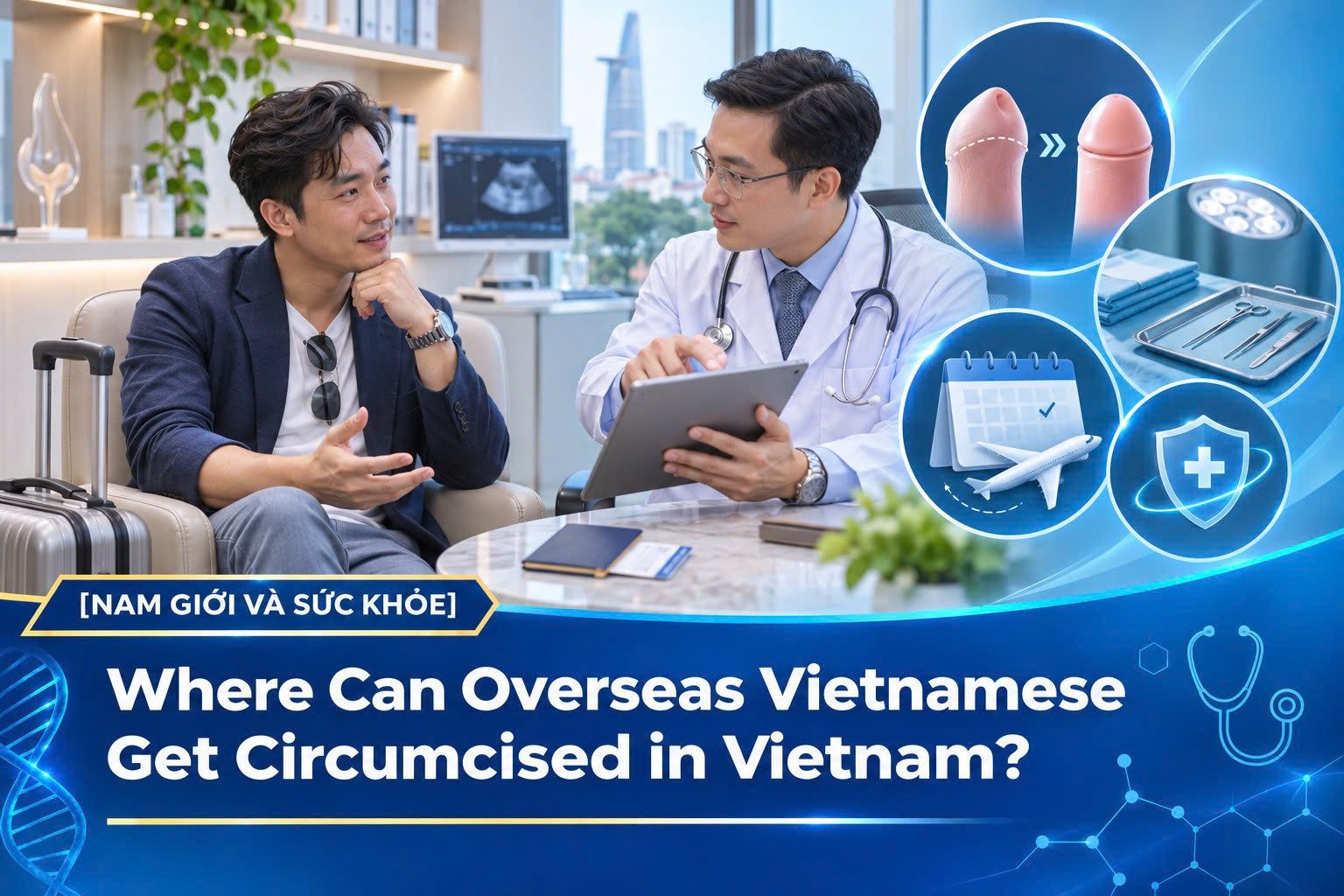
Overseas Vietnamese looking for circumcision in Vietnam can consider Men’s Health Center in Ho Chi Minh City, a specialized andrology and men’s health facility offering adult circumcision and treatment for foreskin-related conditions. For Vietnamese living in the United States, Australia, Canada, Europe, or other countries, undergoing circumcision during a visit to Vietnam can be a practical option. However, choosing an experienced specialist, arranging sufficient recovery time, and planning postoperative care before returning overseas are essential for a safe and satisfactory experience.
1. Where Should Overseas Vietnamese Go for Circumcision in Vietnam?
For overseas Vietnamese returning to Vietnam for medical treatment, choosing the right healthcare facility is an important decision. Although circumcision is generally considered a minor surgical procedure, it still requires appropriate medical evaluation, skilled surgical technique, and postoperative monitoring.
Men’s Health Center, located in Ho Chi Minh City, is an option for overseas Vietnamese seeking professional consultation and adult circumcision.
The center specializes in men’s health, particularly urology, andrology, sexual medicine, and foreskin-related conditions.
Rather than focusing solely on removing the foreskin, its approach considers the patient’s anatomical characteristics, medical history, sexual health, and treatment expectations.
Men’s Health Center – Circumcision Services in Ho Chi Minh City
Clinic information:
- Name: Men’s Health Center – Men’s Health and Andrology Clinic
- Address: 7B/31 Thanh Thai Street, Dien Hong Ward, Ho Chi Minh City, Vietnam
- Hotline/Zalo: +84 902 353 353
- Operating hours: Monday to Sunday, 8:00 AM – 8:00 PM, including public holidays
- Specialties: Circumcision, Andrology, Urology, Sexual Medicine, and Male Genital Health
Overseas patients should contact the center before traveling to discuss appointment availability, possible treatment dates, medical requirements, and follow-up arrangements.
Consultation with a qualified physician is necessary to determine whether circumcision is appropriate.

2. Why Do Overseas Vietnamese Choose to Have Circumcision in Vietnam?
Many Vietnamese living abroad consider combining medical treatment with a family visit or vacation in Vietnam.
Several practical factors may influence this decision.
2.1. Potentially More Affordable Medical Costs
The cost of adult circumcision can differ significantly between countries.
In some healthcare systems, circumcision performed for personal or cosmetic reasons may not be covered by insurance.
Patients may need to pay for consultations, surgery, anesthesia, medications, and follow-up appointments.
Vietnam may offer comparatively affordable treatment options, although actual costs depend on the procedure, facility, and patient’s medical condition.
It is important to compare the full cost of care rather than the advertised surgical fee alone.
Overseas Vietnamese should request an individualized estimate covering consultation, surgery, medications, and postoperative services before making travel arrangements.
2.2. Convenient Access to Specialized Andrology Care
In certain countries, patients may need a referral before seeing a urologist or undergoing elective circumcision.
Depending on local healthcare arrangements, specialist appointments may involve waiting periods.
A planned visit to Vietnam may provide an opportunity to arrange a specialist consultation during an existing trip.
Nevertheless, an appointment does not guarantee that surgery can be performed immediately.
The physician must first assess the patient’s medical suitability.
2.3. Communication in Vietnamese
Even overseas Vietnamese who speak English fluently may prefer discussing sensitive genital health concerns in their native language.
Medical conversations often involve unfamiliar terminology relating to surgical risks, anesthesia, sexual function, and postoperative care.
Receiving explanations in Vietnamese can help patients communicate their symptoms and understand treatment recommendations more comfortably.
Patients who primarily speak English should confirm the availability of suitable language support before booking.
2.4. Privacy and Cultural Familiarity
Circumcision and other genital health concerns can be sensitive topics.
Some men feel more comfortable discussing intimate issues with healthcare professionals who understand their cultural background.
A specialized men’s health clinic can offer a focused setting for discussing concerns about foreskin tightness, genital hygiene, sexual discomfort, and appearance.
Privacy and respectful communication remain important regardless of the patient’s country of residence.
3. Which Overseas Vietnamese Patients May Need Circumcision?
Not every adult man requires circumcision.
The procedure may be recommended for certain medical conditions, while other individuals choose it for personal, religious, or aesthetic reasons.
A specialist examination helps distinguish medically necessary treatment from elective surgery.
3.1. Men With Phimosis
Phimosis occurs when the foreskin is too tight to retract normally over the glans penis.
Adults with phimosis may experience:
- Pain or tightness during erections.
- Difficulty retracting the foreskin.
- Discomfort during sexual intercourse.
- Recurrent inflammation.
- Small cracks or bleeding in the foreskin.
- Difficulty maintaining genital hygiene.
Some cases can be managed with prescription topical corticosteroids or other conservative treatments.
Circumcision may be considered when significant scarring, persistent narrowing, or recurrent symptoms make nonsurgical treatment unsuitable.
3.2. Men With Recurrent Foreskin Inflammation
Recurrent balanitis or balanoposthitis can cause redness, swelling, itching, soreness, and discharge.
These conditions may result from infections, irritants, skin diseases, or underlying medical problems.
When inflammation repeatedly returns despite appropriate treatment, circumcision may help prevent further foreskin-related problems.
However, the underlying cause should be assessed first.
3.3. Men Experiencing Pain During Sexual Activity
A tight foreskin or short penile frenulum may produce pulling sensations during erections or intercourse.
In some cases, the frenulum can tear or bleed.
Circumcision is not always necessary for these problems.
Patients with a short frenulum may benefit from frenuloplasty or another appropriate treatment.
An andrologist can recommend the procedure best suited to the individual’s anatomy.
3.4. Men Seeking Aesthetic Circumcision
Some men with otherwise healthy foreskins choose circumcision because they prefer the appearance of an exposed glans or find foreskin management inconvenient.
In elective cases, counseling should address the permanent anatomical change, potential scarring, possible changes in sensation, and realistic expectations.
Circumcision does not guarantee improvement in erectile function, ejaculation control, or sexual satisfaction.
4. Why Consider Men’s Health Center for Circumcision?
Men’s Health Center focuses on medical conditions affecting male sexual and reproductive health.
For overseas Vietnamese, this specialized orientation may be particularly useful when circumcision is associated with other concerns such as sexual discomfort, anxiety, or previous unsuccessful treatment.
4.1. Medical Expertise in Andrology and Urology
The center’s medical team includes physicians with professional experience in male genital conditions, urology, and sexual medicine.
Its services cover circumcision, foreskin disorders, sexual dysfunction, reproductive health, and related men’s health concerns.
A specialized assessment allows physicians to evaluate whether circumcision is medically appropriate or whether another treatment may be more suitable.
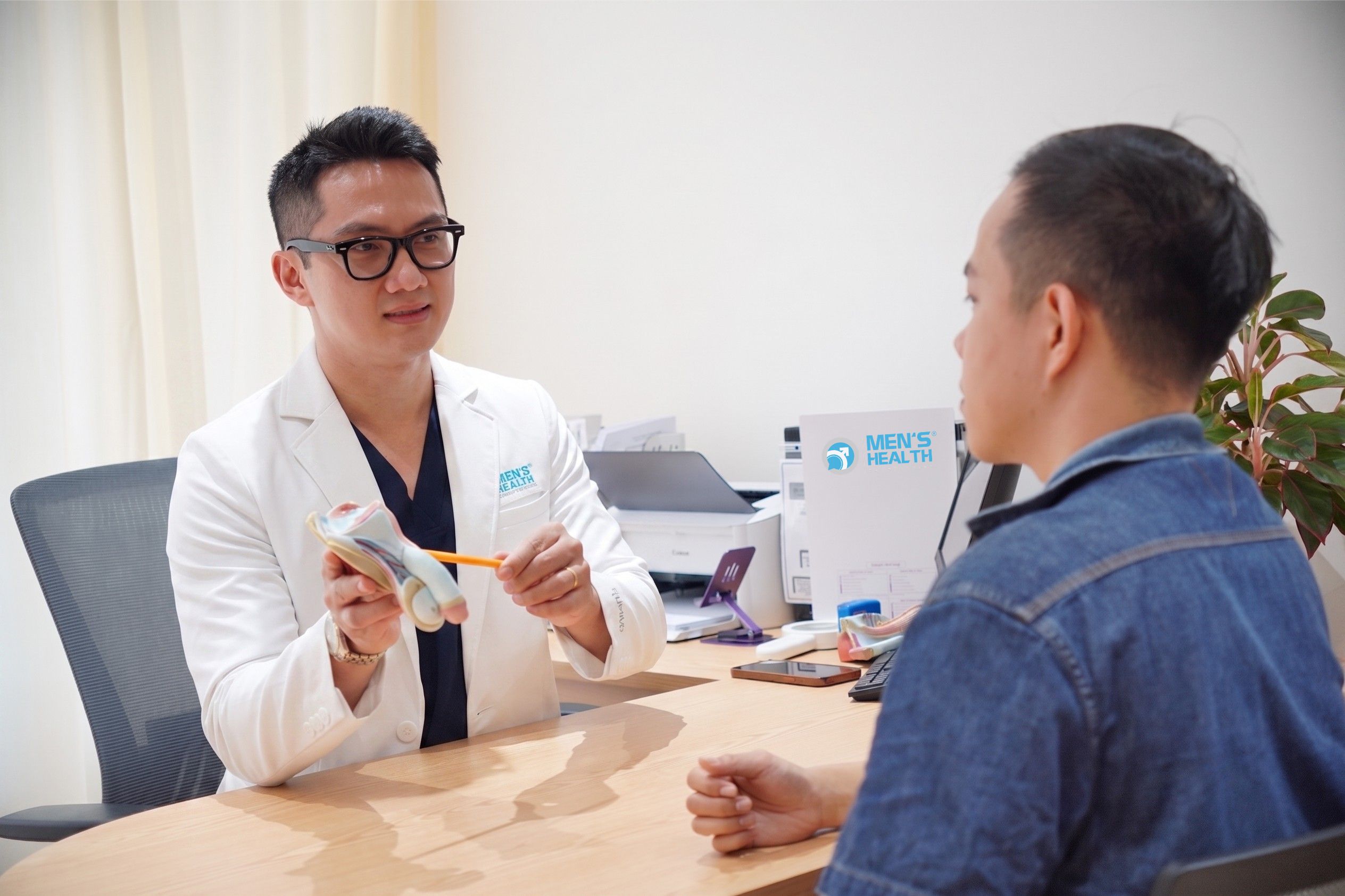
4.2. Professional Guidance From Dr. Tra Anh Duy
One of the center’s leading medical professionals is Dr. Tra Anh Duy, PhD, MD, Level II Specialist (TS.BS.CK2 Trà Anh Duy).
Dr. Tra Anh Duy is the Founder and CEO of the Men’s Health Center system and specializes in andrology, urology, and sexual medicine.
His professional background also includes clinical psychology education and male sexual health counseling.
This multidisciplinary perspective is relevant for patients whose genital concerns involve both physical symptoms and psychological distress.
For example, men who are anxious about genital appearance or sexual performance may require counseling in addition to anatomical assessment.
Individual patients should confirm the availability of their preferred physician and the identity of the operating surgeon when arranging treatment.
4.3. Attention to Functional and Cosmetic Outcomes
Circumcision changes the appearance and structure of the foreskin permanently.
Therefore, the surgical plan should consider not only foreskin removal but also:
- Preservation of appropriate penile skin coverage.
- Comfortable erections after healing.
- Anatomically suitable wound closure.
- Bleeding prevention and wound management.
- Scar formation and cosmetic expectations.
- Long-term urinary and sexual function.
Although careful technique can reduce certain risks, no clinic can guarantee a completely invisible scar or an unchanged sensory experience.
4.4. Comprehensive Men’s Health Assessment
Some men considering circumcision also report erectile difficulties, premature ejaculation, or recurrent genital discomfort.
These issues do not necessarily result from the foreskin.
At a specialized center, patients can discuss multiple concerns during their medical evaluation.
This helps avoid unnecessary procedures based on the mistaken belief that circumcision alone will solve every sexual health problem.
4.5. Psychological and Sexual Health Support
Men’s Health Center also incorporates psychological counseling into its broader approach to male health.
This can be valuable for patients experiencing anxiety about genital appearance, embarrassment during intimacy, or unrealistic expectations regarding surgery.
Psychosexual counseling may help distinguish anatomical problems from psychological concerns and support informed medical decisions.

5. How Should Overseas Vietnamese Prepare Before Traveling?
For patients living abroad, preparation can significantly influence the overall treatment experience.
A circumcision appointment should be planned around medical suitability and postoperative recovery, not simply around available vacation days.
Step 1: Contact Men’s Health Center Before Departure
Patients can contact Men’s Health Center through its hotline or Zalo to request information about circumcision services.
It is useful to explain:
- Current country of residence.
- Planned arrival and departure dates.
- Age and reason for seeking circumcision.
- Previous foreskin problems or genital surgery.
- Existing medical conditions.
- Preferred consultation dates.
Patients should ask whether a preliminary remote discussion is available, but understand that a physical examination may still be required before surgery.
Step 2: Prepare Relevant Medical Information
Before traveling, patients should prepare details of their medical history, particularly if they have diabetes, cardiovascular disease, bleeding disorders, or previous surgical complications.
They should also bring an accurate medication list.
Some medications, including anticoagulants and antiplatelet drugs, may affect surgical planning.
Patients must not stop prescribed medications without instructions from their treating physician.
Step 3: Allow Enough Time for Postoperative Observation
A common mistake is scheduling circumcision immediately before an international flight.
Even uncomplicated circumcision requires wound monitoring and time for early postoperative symptoms to settle.
For travel planning, allowing approximately one to two weeks in Vietnam after surgery may provide a practical opportunity for early recovery and reassessment.
However, this is not a universal medical requirement or a guarantee that flying will be safe after that period.
The appropriate departure date depends on the operation, anesthesia, wound healing, complications, general health, and flight duration.
Patients should discuss their intended flight date with the surgeon before committing to nonrefundable travel arrangements.
Step 4: Arrange Appropriate Accommodation
Patients should stay somewhere comfortable and accessible during the initial recovery period.
They should avoid travel schedules involving extensive walking, long motorcycle journeys, strenuous sightseeing, or swimming immediately after surgery.
A quiet environment and reliable transportation can make postoperative care easier.
Step 5: Plan Follow-Up Care Abroad
Before leaving Vietnam, patients should have a clear plan for accessing medical care after returning to their country of residence.
They should obtain relevant medical records, postoperative instructions, and contact details for the treating facility.
Medical travel guidance emphasizes that continuity of care is a critical part of treatment abroad.
6. What Happens During Circumcision at a Specialized Clinic?
The treatment process generally includes consultation, clinical evaluation, surgery when indicated, and postoperative care.
6.1. Consultation and Physical Examination
The doctor evaluates the foreskin, glans, frenulum, and surrounding tissues.
The consultation also includes an assessment of symptoms, medical history, and the patient’s expectations.
When necessary, additional examinations or investigations may be recommended.
6.2. Choosing an Appropriate Surgical Technique
Several circumcision techniques are available, including conventional surgical approaches and selected device-assisted methods.
The most appropriate technique depends on factors such as foreskin anatomy, scarring, inflammation, and the physician’s experience.
No single circumcision technique is universally superior for every patient.
Patients should ask why a particular method is recommended and what risks and recovery expectations apply.
6.3. Anesthesia and Surgical Procedure
Adult circumcision can be performed under local anesthesia, although general or regional anesthesia may be appropriate in some circumstances.
The procedure involves removing the foreskin and closing the remaining skin edges.
The operation often takes approximately 30 minutes, but actual duration varies with technique and complexity.
6.4. Recovery and Discharge
Many uncomplicated adult circumcisions are performed as day procedures.
After surgery, patients receive instructions regarding medication, wound hygiene, dressings, physical activity, and warning signs.
If sedation or general anesthesia is used, additional restrictions and supervision may be required.
Discharge arrangements depend on the patient’s clinical condition and the procedure performed.
7. How Long Does Recovery Take Before Returning Overseas?
Recovery is especially important for overseas Vietnamese who must return to work or travel internationally.
The National Health Service in the United Kingdom advises that complete healing after adult circumcision typically takes approximately four to six weeks, sometimes longer.
Early recovery and complete healing are not the same.
| Recovery period | What patients may experience | General recommendations |
| First 24–48 hours | Mild bleeding, soreness, swelling, sensitivity | Rest appropriately, follow wound-care instructions |
| Days 3–7 | Gradually improving discomfort, possible bruising | Avoid strenuous activity and monitor healing |
| Weeks 2–3 | Continued wound healing, reduced swelling | Avoid activities that may disturb the wound |
| Weeks 4–6 | Further tissue healing and scar maturation | Resume sexual activity only when fully healed and medically appropriate |
| After 6 weeks | Most uncomplicated wounds have healed | Seek reassessment if persistent symptoms remain |
These are general expectations rather than a guaranteed schedule.
Can Patients Fly Shortly After Circumcision?
There is no universally applicable number of days after uncomplicated adult circumcision that guarantees safe international air travel.
Flying too early may create difficulties if bleeding, infection, swelling, or another complication develops during travel.
Prolonged sitting after surgery may also contribute to venous thromboembolism risk, particularly in patients with additional risk factors.
Therefore, patients should receive individualized clearance from their treating physician before taking a long-haul flight.
For men flying to the United States, Canada, Australia, or Europe, it is particularly important to consider the duration of travel and the availability of medical care after arrival.
Can Patients Return to Work Immediately?
Many patients need approximately one week away from work, although some can return to light duties sooner if comfortable.
Jobs involving physical labor, heavy lifting, or extensive movement may require a longer recovery period.
Patients should plan their return to work according to the surgeon’s recommendations rather than the completion date of their trip.
8. Essential Postoperative Care for Overseas Vietnamese Patients
Proper postoperative care helps support wound healing and reduce avoidable complications.
Maintain Appropriate Wound Hygiene
Patients should follow their surgeon’s instructions on cleaning the wound, changing dressings, and showering.
The area should generally be kept clean, with gentle drying after washing.
Avoid applying unprescribed antiseptics, herbal preparations, or cosmetic products directly to the surgical wound.
Wear Comfortable Clothing
Loose-fitting, breathable clothing may reduce friction and discomfort.
Some patients prefer supportive underwear depending on swelling and sensitivity.
The most comfortable choice varies between individuals.
Avoid Strenuous Activities
Heavy lifting, cycling, intense exercise, swimming, and activities causing friction around the penis should be avoided during early recovery.
The duration of restrictions should be individualized.
Temporarily Avoid Sexual Activity
Sexual intercourse and masturbation should generally be avoided for at least four weeks and until the wound has completely healed.
Some patients may require approximately six weeks or longer before sexual activity is appropriate.
Resuming intercourse too early can increase the risk of bleeding, pain, or wound separation.
Recognize Warning Signs
Patients should seek medical attention promptly if they develop persistent bleeding, fever, worsening redness, foul-smelling discharge, or increasing pain.
Inability to urinate, severe swelling, or uncontrolled bleeding requires urgent medical assessment.
Complications should never be ignored simply because an international flight is scheduled.

9. How Much Does Circumcision in Vietnam Cost for Overseas Vietnamese?
The price of adult circumcision in Vietnam varies according to the patient’s medical condition and the services required.
Important cost factors include the surgical technique, anesthesia, complexity of treatment, medication, and follow-up care.
Patients should clarify whether the quoted price includes:
- Initial specialist consultation.
- Preoperative evaluation.
- Surgical and anesthesia fees.
- Postoperative medications.
- Dressing changes and follow-up examinations.
- Additional treatment if complications occur.
International patients should also consider accommodation, transportation, travel insurance, and possible medical costs after returning home.
For an accurate estimate at Men’s Health Center, patients can contact +84 902 353 353 before their trip.
The final treatment plan and cost should be confirmed after a medical evaluation.
10. Common Mistakes Overseas Vietnamese Should Avoid
Planning circumcision during a short visit to Vietnam can be convenient, but several common mistakes may compromise safety.
Choosing a facility based only on a low advertised price: Treatment quality, physician qualifications, procedural conditions, and postoperative support are more important than an attractive promotion.
Expecting surgery without an examination: A physical assessment is necessary to determine whether circumcision is indicated and which technique is appropriate.
Scheduling an international flight immediately afterward: Patients should allow time for early recovery, clinical reassessment when indicated, and unexpected complications.
Assuming circumcision will cure sexual dysfunction: Circumcision can relieve discomfort related to certain foreskin disorders, but it is not an established primary treatment for erectile dysfunction or premature ejaculation.
Ignoring the need for postoperative follow-up: Medical care may still be required after returning overseas. Patients should understand whom to contact if healing does not progress normally.
Careful preparation and realistic expectations can help patients make better treatment decisions.
11. Overseas Vietnamese Circumcision in Vietnam & Frequently Asked Questions
Where can overseas Vietnamese get circumcised in Ho Chi Minh City?
Overseas Vietnamese seeking adult circumcision can consider Men’s Health Center at 7B/31 Thanh Thai Street, Dien Hong Ward, Ho Chi Minh City. The center provides specialized andrology and foreskin-related healthcare services.
Can Vietnamese Americans get circumcised while visiting Vietnam?
Yes. Vietnamese Americans visiting Vietnam may arrange a consultation for adult circumcision, subject to medical suitability and clinic availability. They should plan sufficient recovery time and arrange access to postoperative care after returning to the United States.
Can overseas Vietnamese from Australia or Canada undergo circumcision in Vietnam?
Yes. The general medical considerations are similar regardless of the patient’s country of residence. Patients should discuss their health history, travel schedule, and postoperative follow-up plans with the treating physician.
Is circumcision in Vietnam safe for international patients?
Adult circumcision is a well-established procedure, but all surgery carries risks. Safety depends on appropriate patient selection, practitioner qualifications, procedural conditions, surgical technique, and postoperative care. Treatment in Vietnam is not automatically safer or less safe simply because of its location.
Can I undergo circumcision on the same day as my consultation?
Same-day treatment may be possible in some circumstances, but it should not be assumed. The physician must first assess whether the patient is suitable for surgery, whether necessary preparations are complete, and whether an appropriate procedure appointment is available.
How many days should I stay in Vietnam after circumcision?
A stay of approximately one to two weeks after surgery may offer time for early recovery and follow-up, but it does not mean complete healing has occurred. Patients should agree on their travel plans with the surgeon, especially before long international flights.
Can I fly back to the United States one week after circumcision?
Some patients may be sufficiently recovered for travel within that period, while others may not. There is no guaranteed safe departure date. The decision should take into account wound healing, complications, overall health, and the duration of the flight.
Will circumcision affect penile sensation or sexual pleasure?
Circumcision permanently changes the foreskin and may alter genital sensation or the experience of sexual activity. Individual experiences vary. Patients should discuss potential sensory and sexual changes before deciding to undergo surgery.
Is adult circumcision painful?
Anesthesia is used to reduce pain during the procedure. Some soreness, swelling, and increased sensitivity may occur afterward. Discomfort usually improves as healing progresses, although recovery varies.
Can I contact Men’s Health Center before arriving in Vietnam?
Yes. Patients can contact Men’s Health Center through its published hotline or Zalo number to ask about specialist availability, fees, appointment arrangements, and preoperative requirements. Whether any preliminary remote assessment is available should be confirmed directly.
12. Conclusion: Where Should Overseas Vietnamese Go for Circumcision?
For overseas Vietnamese planning to return to Vietnam for circumcision, choosing a specialized men’s health facility and arranging adequate postoperative care should be the main priorities.
Although circumcision is usually a relatively short procedure, the decision requires proper medical assessment, realistic expectations, and careful travel planning.
Men should avoid scheduling surgery too close to their departure date and should ensure that follow-up care will remain accessible after they return overseas.
In Ho Chi Minh City, Men’s Health Center is an established option for specialized adult circumcision and male genital healthcare.
Under the leadership of Dr. Tra Anh Duy, PhD, MD, Level II Specialist (TS.BS.CK2 Trà Anh Duy), the center focuses on comprehensive men’s health services, including andrology, urology, sexual medicine, and psychological well-being.
For Vietnamese living in the United States, Canada, Australia, Europe, or elsewhere, Men’s Health Center offers an opportunity to discuss circumcision with a specialized medical team during a planned visit to Vietnam.
Contact Men’s Health Center
- Clinic: Men’s Health Center, Ho Chi Minh City
- Address: 7B/31 Thanh Thai Street, Dien Hong Ward, Ho Chi Minh City, Vietnam
- Hotline/Zalo: +84 902 353 353
- Operating hours: 8:00 AM – 8:00 PM, Monday to Sunday
Men’s Health Center – Specialized Andrology, Circumcision, and Comprehensive Men’s Healthcare in Vietnam.